
Guide
How to optimize the marketing budget across different product groups and target audiences: The science of portfolio allocation for media investments
When planning strategies, every marketing director and brand manager faces the same complex question: How should limited media resources be allocated across multiple product groups and different target audiences to maximize the overall return? In practice, budgets are often allocated across product groups based on the "same formula as last year," the strength of individual categories, or simply distributed evenly. The same applies to target audiences—instead of directing resources where media and purchase affinity are highest, investments are often spread across all channels using a "something for everyone" approach (a multichannel strategy). The result? Hidden media waste, cannibalization of your own products, and inefficient investment allocation. So how can econometrics help shift from guesswork to the scientific management of the entire investment portfolio?
1. Marketing as an Investment Portfolio: Allocation Across Product Groups
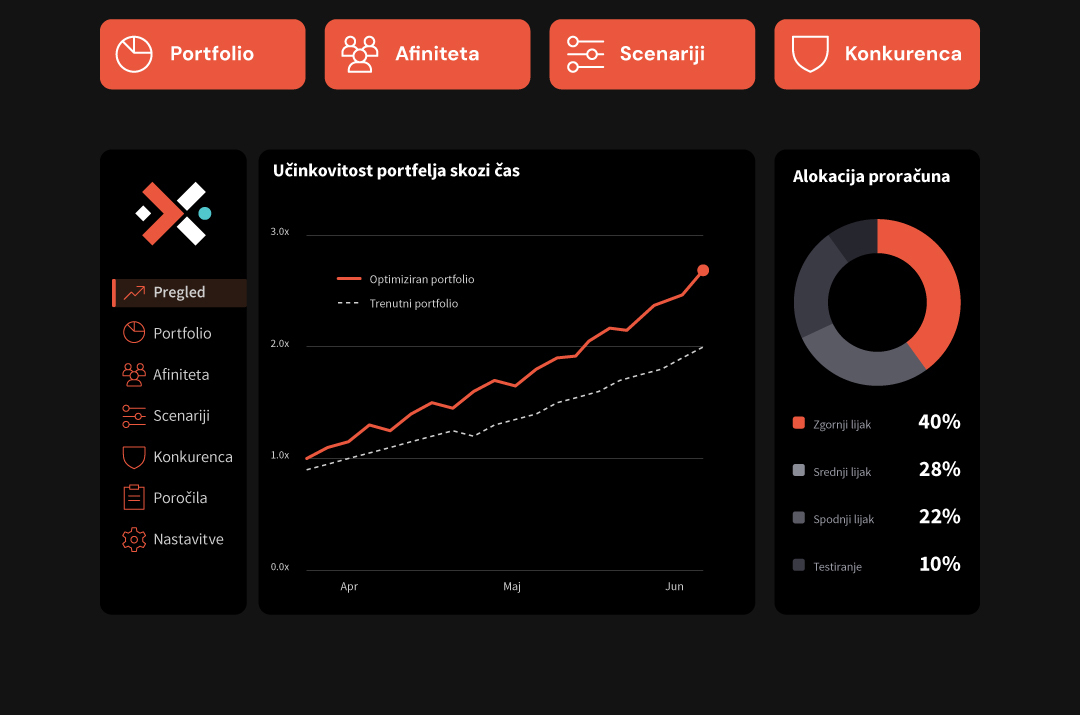
Managing multiple brands or product groups within a company requires the same approach used by financial asset managers: an investment portfolio strategy.
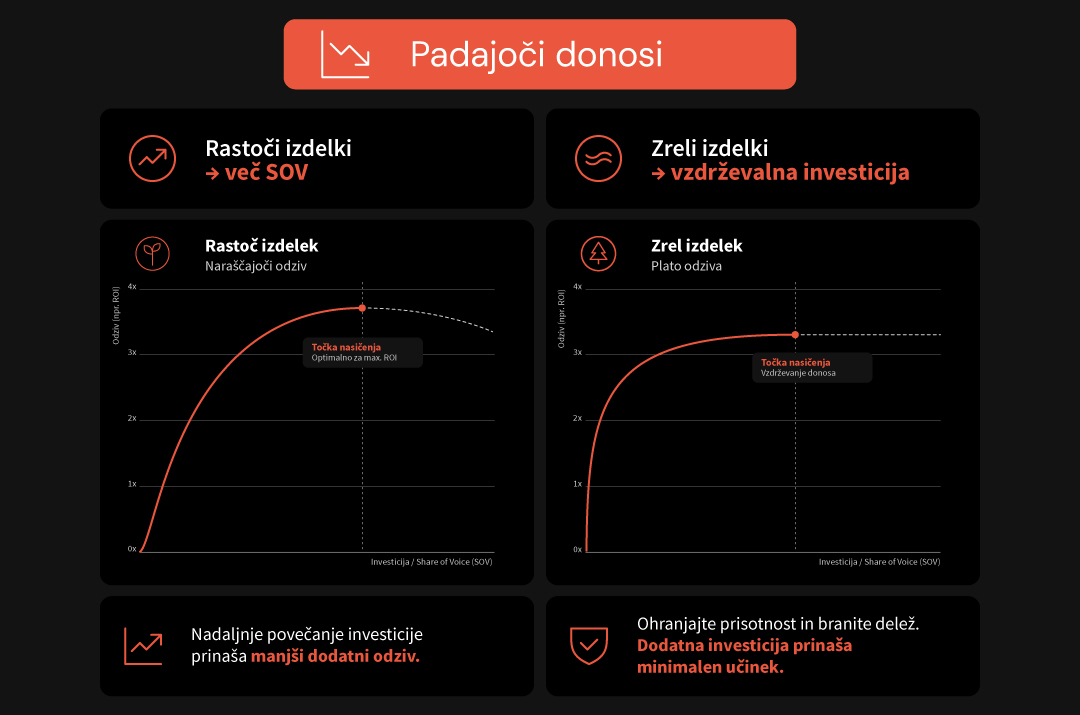
Each product group is at a different stage of its life cycle and faces different competitive dynamics:
Growth products require a higher Share of Voice (SOV) than their Share of Market (SOM) in order to capture new market share.
Mature products (cash cows) require maintenance investment to protect margins, while excessive advertising can quickly reach the saturation point.
Without econometric models, companies often overinvest in mature categories where incremental sales are minimal, while underinvesting in product groups with the greatest growth potential.
Mathematical portfolio optimization makes it possible to determine the relative strength or importance of each target group or campaign within your portfolio of brands or product groups. This allows you to allocate more advertising resources to the product groups and target audiences that are more important to your business.
2. Precise Targeting by Target Audience and Purchase Affinity
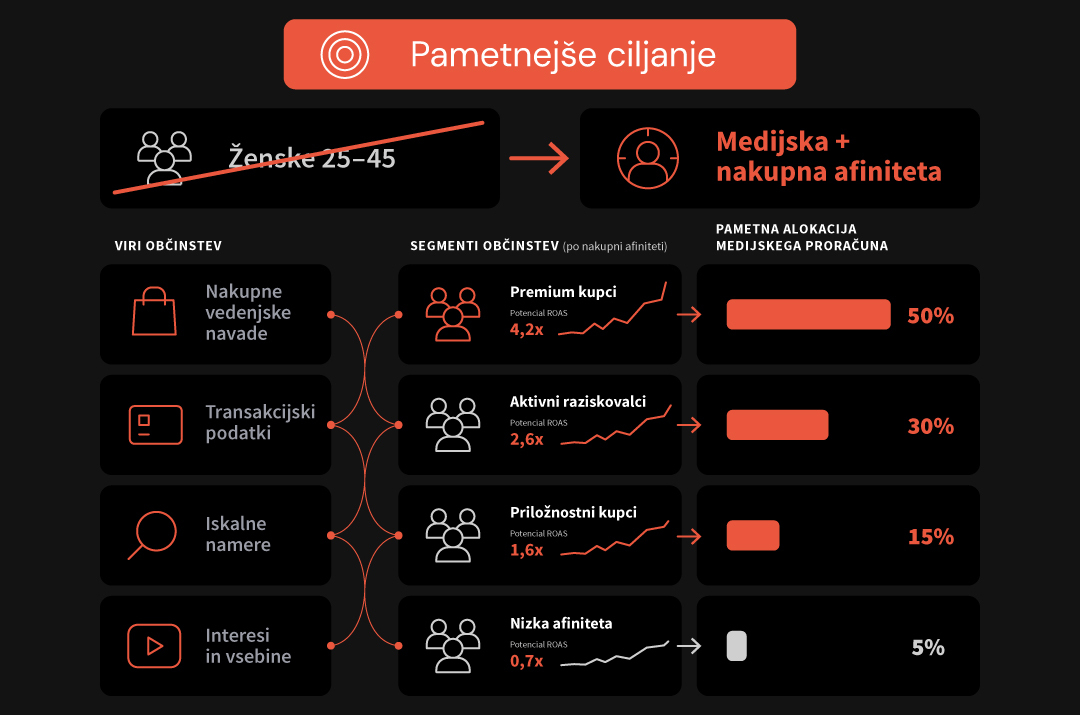
The second level of complexity is the allocation of investments across different target audiences. Modern consumers are not homogeneous, and their media consumption is highly fragmented.
A common planning mistake is using the same media channels for all target audiences or relying on "broad reach" at the lowest possible cost.
The econometric approach works differently:
Media profile and affinity analysis: Each media channel and individual media outlet is evaluated based on the level of media and purchase affinity a specific target audience has for your brand across each channel and medium.
Focus on potential: Investment is allocated precisely where individual target audiences offer the greatest overall potential for your brand.
Eliminating ineffective impressions: Channels and media where the brand’s presence is less effective are excluded, while those most likely to reach audiences interested in your advertising messages are identified and recommended.
3. From Separate Silos to the Bigger Picture: One-Off Campaigns as Part of the Whole
Another major marketing challenge is the fragmentation of investments across individual, isolated campaigns (e.g. an Easter promotion, the launch of new packaging, autumn discounts).
When each campaign is treated separately, brand managers often overlook the cumulative effect on the brand:
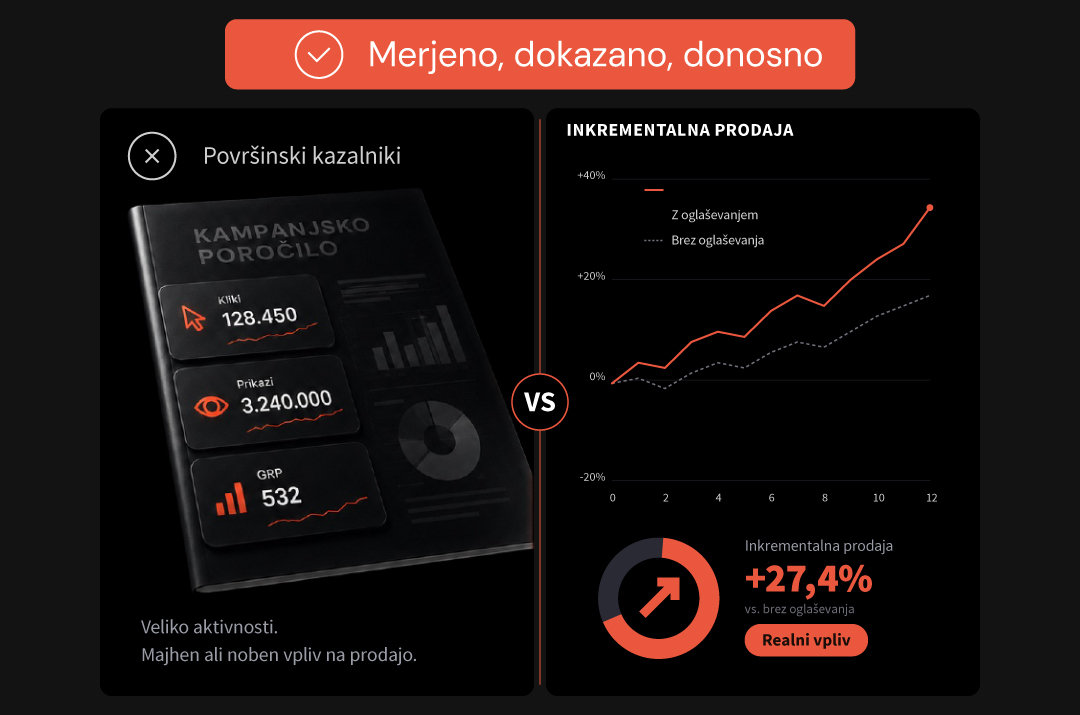
At the end of each campaign, agencies and media outlets provide reports on reach, clicks (vanity metrics), and GRPs, but these do not reveal how that specific campaign affected overall sales or the performance of other product groups.
Integration into the bigger picture: With econometric modeling, every seasonal or one-off campaign becomes part of a comprehensive picture. The model precisely isolates individual campaigns from broader market trends, seasonality, and competitor activity.
4. The Solution: Optimizing the Total Investment with Econometrix
To enable marketing directors and brand managers to take full control of the performance of their entire portfolio, Econometrix provides an integrated data ecosystem:
Strategic allocation of investments across product groups: Calculate the optimal mix of investments based on categories, priorities, and performance potential. Allocate resources so that the entire portfolio delivers maximum profit.
Precise targeting based on target audiences’ media profiles: Using multiple channel-selection factors, direct media investments precisely toward the media that most effectively reach desired customers with a high purchase affinity.
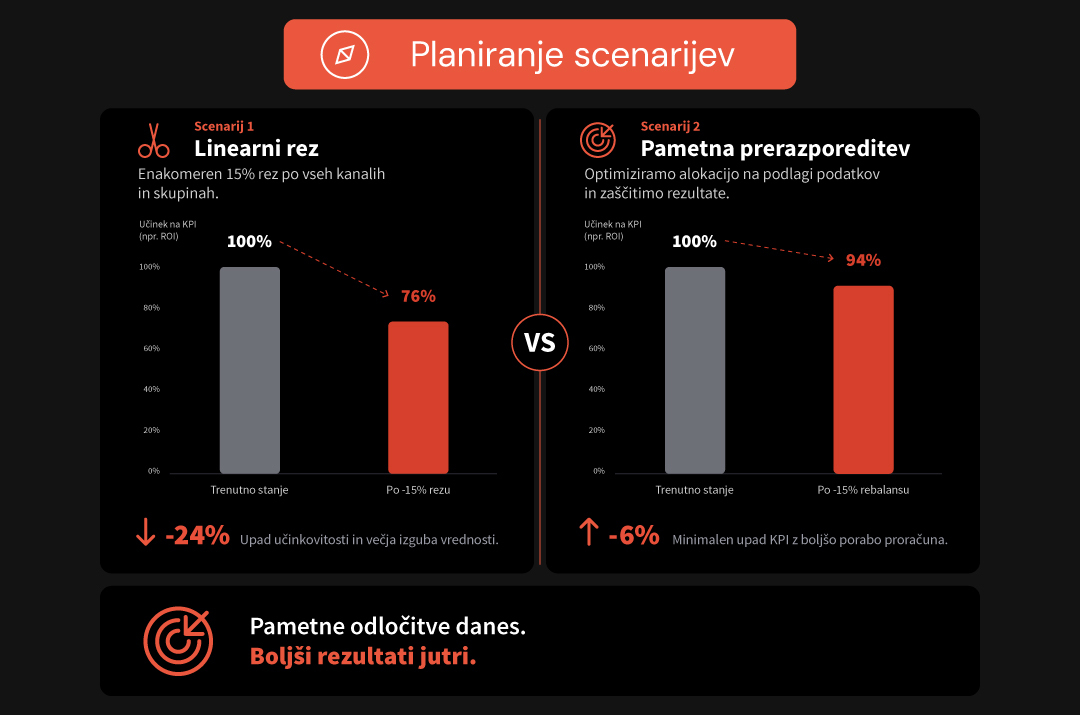
Budget change simulation (Scenario Planning): What happens if the total budget is reduced by 15% or business objectives change? Econometrix calculates new baselines in real time and reallocates investments across channels and product groups so that budget changes have minimal impact on the final sales result.
Insight into competitors’ investments by category: Detailed insight into where competitors are investing within your category reveals their blind spots (under-served channels) and enables you to achieve a greater impact with fewer resources.
Conclusion
Modern brand management no longer allows budget allocation based on gut feeling or last year’s spending patterns. With Econometrix, marketing directors and brand managers gain a strategic tool that transforms their entire media investment into a mathematically optimized system.
The result is clear answers for executive management, complete control over agency briefs, and maximum efficiency from every euro invested across different products and customer segments.
Want to discover how to optimize media investments across your product categories? Book a demo of Econometrix or test the model using your own data: https://econometrix.app/en